
Full Coverage Car Insurance Companies — Idaho
Free to compare
When Adding Full Coverage to a Second Vehicle Changes Your Policy Structure
You own two vehicles in Idaho and want full coverage on both. You assume adding the second car to your existing policy is automatic, but your carrier tells you the vehicles must be garaged at the same address to qualify for the multi-car discount. One car parks at your primary residence, the other at a vacation property or a college-age driver's apartment. The discount you expected disappears because the policy structure does not match the household reality.
Full coverage in Idaho means liability plus collision and comprehensive. Idaho law requires $25,000 per person and $50,000 per accident in bodily injury liability, plus $15,000 in property damage liability. Full coverage adds physical damage protection for your own vehicles. When you insure multiple vehicles, the multi-car discount applies only when every vehicle sits on the same policy and meets the carrier's garaging and titling rules. Separate policies, separate garaging addresses, or vehicles titled to different household members can disqualify the discount entirely.
“The multi-car discount is not a carrier loyalty benefit — it is a same-policy discount that applies only when every vehicle sits on the same policy number.”

Get More Than the Idaho Minimum for Less
Get My Idaho Car Insurance Quote19 carriers
Idaho Multi-Vehicle Writers
Nineteen carriers write auto insurance in Idaho, but not all write the same household structures. Some require every vehicle to share a garaging address; others allow split garaging within the same county. The carrier roster determines which policy structures are available to your household.
Idaho Department of Insurance carrier roster
The Multi-Car Discount Requires One Policy, Not Just One Carrier
The multi-car discount is not a carrier loyalty benefit. It is a same-policy discount. If you own three vehicles and insure two on one policy and one on a separate policy with the same carrier, only the policy with two vehicles qualifies for the discount. The third vehicle pays the single-car rate. Carriers price multi-vehicle policies lower because bundling reduces administrative cost and increases retention, but that pricing applies only when every vehicle sits on the same policy number.
Idaho households with vehicles garaged at different addresses face a structural choice: combine the vehicles on one policy and accept the garaging-address restriction, or keep separate policies and lose the discount. Some carriers allow a single policy to cover vehicles garaged at different addresses if both addresses are in Idaho and the policyholder owns both vehicles. Others require every vehicle to garage at the policy's primary address. The rule varies by carrier, and the difference can be the entire discount.
Vehicles titled to different household members create the same structural problem. A parent and adult child each own a car, both garaged at the same address. If each vehicle is titled to its driver, some carriers will not write both vehicles on one policy. The household must choose: retitle both vehicles to one owner to qualify for the multi-car discount, or accept two separate policies and two single-car rates.

The multi-car discount disappears when vehicles are titled separately or garaged at different addresses, even when the same carrier writes both policies.
Related Articles






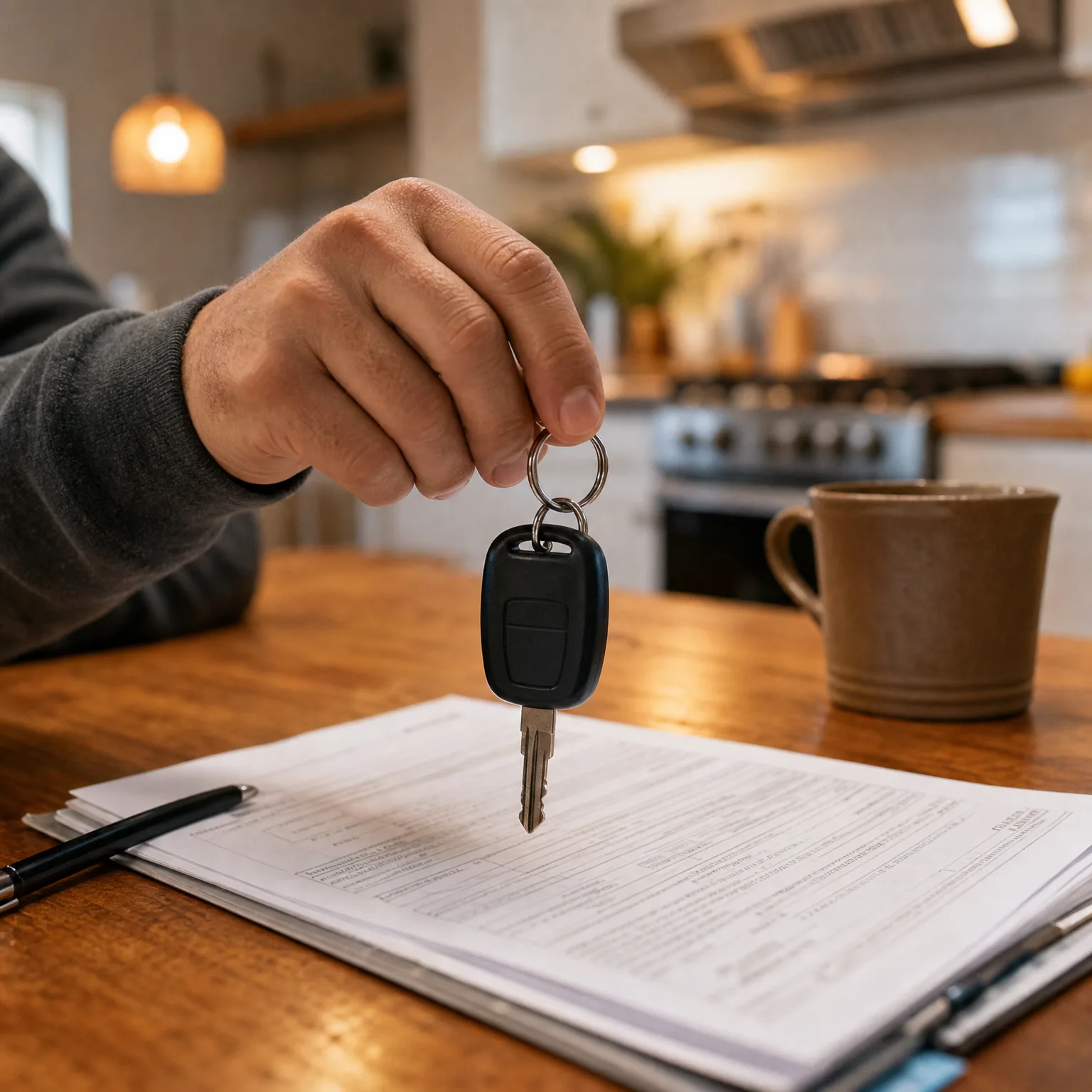
How Adding Collision and Comprehensive Re-Rates the Entire Policy
Adding full coverage to a vehicle already on your policy re-rates the entire policy, not just the newly-covered vehicle. Carriers price multi-vehicle policies as a single risk pool. When you add collision and comprehensive to one vehicle, the carrier recalculates the household's total risk exposure and adjusts the premium for every vehicle on the policy. The increase is not simply the cost of the new coverage; it reflects the re-rated household risk.
Idaho households adding a second vehicle mid-term face the same re-rating. The new vehicle does not pay a flat add-on amount. The carrier re-prices the entire policy based on the new vehicle count, the garaging address, the drivers assigned to each vehicle, and the coverage selections. A household adding a high-value vehicle with full coverage to a policy that previously covered one low-value vehicle with liability only can see the total premium more than double, even though the first vehicle's coverage did not change.
Deductible selection affects the re-rating. A $500 deductible on collision and comprehensive produces a higher premium than a $1,000 deductible. When adding full coverage to multiple vehicles, choosing a higher deductible on the lower-value vehicle and a lower deductible on the higher-value vehicle can reduce the total premium without leaving either vehicle underinsured. Carriers allow different deductibles on different vehicles within the same policy.
$888.07
Idaho Average Annual Expenditure Per Vehicle
Idaho drivers spent an average of $888.07 per insured vehicle in 2023, one of the lowest averages in the western United States. Full coverage costs more than liability-only, but Idaho's low average reflects the state's rural driving conditions and lower theft and collision rates compared to urban states.
NAIC Auto Insurance Database Report 2023

Comparing Carriers by Household Structure, Not by Advertised Rate
Advertised rates assume a standard household: one named insured, all vehicles garaged at one address, all vehicles titled to the policyholder. Your household may not match that structure. When comparing carriers, filter by the household structure the carrier actually writes, then compare rates within that filtered set. A carrier that advertises the lowest rate but cannot write your household structure is not a usable option.
Idaho households with non-standard structures should quote with at least three carriers that write their specific arrangement. Standard carriers offer the lowest rates for households that fit their underwriting rules. Non-standard carriers charge higher base rates but write households that standard carriers decline.
Compare Idaho Carriers That Write Your Household
Start by identifying which carriers write your household structure: the number of vehicles, the garaging addresses, the titling arrangement, and the drivers assigned to each vehicle. Use the carrier roster above to filter by household structure, then request quotes from at least three carriers that write your arrangement. Compare the total premium for all vehicles combined, not the per-vehicle rate, because the multi-car discount applies to the policy total. Verify that every vehicle qualifies for the discount before binding coverage.
Which Idaho Carriers Write Split-Garaging and Multi-Owner Households
Standard-tier carriers such as State Farm, Allstate, and American Family typically require every vehicle on a multi-car policy to garage at the policy's primary address and be titled to the named insured or a household member on the same policy. Geico, Progressive, and Nationwide allow more flexibility: vehicles garaged at different Idaho addresses can sit on the same policy if the policyholder owns both vehicles. Non-standard carriers such as Bristol West, Dairyland, and The General write households that standard carriers decline, including separate titling and non-relative household members, but the base rate is higher and the multi-car discount is smaller.
When comparing carriers, ask three questions before quoting: Does the carrier allow vehicles garaged at different addresses on the same policy? Does the carrier require every vehicle to be titled to the named insured? Does the carrier write policies for non-relative household members sharing vehicles? The answers determine which carriers can write your household structure. A lower advertised rate from a carrier that cannot write your household is not a usable quote.
Get Your Free Quote
Get My Idaho Car Insurance QuoteFrequently Asked Questions
Does full coverage in Idaho include liability insurance?
Yes. Full coverage in Idaho means liability plus collision and comprehensive. Idaho requires $25,000 per person and $50,000 per accident in bodily injury liability, plus $15,000 in property damage liability. Collision and comprehensive cover physical damage to your own vehicle.
Can I get the multi-car discount if my vehicles are garaged at different addresses in Idaho?
It depends on the carrier. Some Idaho carriers allow vehicles garaged at different addresses on the same policy if both addresses are in Idaho and the policyholder owns both vehicles. Other carriers require every vehicle to garage at the policy's primary address. Ask the carrier before quoting.
Do I need full coverage on both vehicles to get the multi-car discount in Idaho?
No. The multi-car discount applies to the policy, not to the coverage level. You can carry full coverage on one vehicle and liability-only on another vehicle, and both vehicles qualify for the discount as long as they sit on the same policy.
Which Idaho carriers write multi-vehicle policies for non-standard households?
Bristol West, Dairyland, GAINSCO, National General, Progressive, and The General write multi-vehicle policies for households that standard carriers decline, including separate titling, non-relative household members, and split garaging. The base rate is higher, but the household structure is covered.
How does adding a second vehicle mid-term affect my Idaho auto insurance premium?
Adding a vehicle mid-term re-rates the entire policy. The carrier recalculates the household's total risk exposure and adjusts the premium for every vehicle on the policy. The increase is not simply the cost of the new vehicle; it reflects the re-rated household risk.
Can I have different deductibles on different vehicles in Idaho?
Yes. Idaho carriers allow different deductibles on different vehicles within the same policy. Choosing a higher deductible on a lower-value vehicle and a lower deductible on a higher-value vehicle can reduce the total premium without leaving either vehicle underinsured.