
Roadside Assistance on Multi-Car Policies — Idaho
Free to compare
The Per-Vehicle Charge Reality
You own three cars. One commutes daily to Boise, one runs errands twice a week, and the third sits in the driveway most months. Your carrier quotes roadside assistance as a per-vehicle add-on: you pay the fee for all three cars, or you skip it entirely. The car that never leaves home costs the same to cover as the one logging 15,000 miles a year.
This is the structural reality of bundled roadside assistance on a multi-car policy in Idaho. The coverage attaches to each vehicle individually. You cannot pick and choose which cars get it. If you want roadside for the daily driver, the policy charges you for the rarely-driven sedan too. That per-vehicle multiplication is what brings most multi-car households to this decision point.
“The car that never leaves home costs the same to cover as the one logging 15,000 miles a year.”
Get More Than the Idaho Minimum for Less
Get My Idaho Car Insurance Quote2,031,332
Idaho Registered Vehicles
Idaho registers over two million vehicles. Many households own multiple cars, and the decision to add roadside assistance multiplies across every vehicle on the policy. The per-vehicle fee structure means a three-car household pays three times the single-car rate.
Idaho Transportation Department, 2022
What Roadside Assistance Actually Covers
Roadside assistance through your auto insurer typically covers towing to the nearest repair facility, jump-starts, flat tire changes, lockout service, and fuel delivery when you run out of gas. Coverage limits vary by carrier: some cap towing at 15 miles, others at 100. Some include winching if you slide off a snowy road; others do not.
The coverage follows the vehicle, not the driver. If your teenager takes the family car to McCall and needs a tow, the policy covers it. If you borrow a friend's car and it breaks down, your roadside policy does not help. This vehicle-specific structure is why the per-car fee exists: each car on your policy gets its own coverage envelope.
Roadside assistance does not cover mechanical repairs, parts, or labor once the car reaches the shop. It gets the car to the facility. It does not pay the bill after that. If the tow exceeds the policy's mileage cap, you pay the difference out of pocket.

The blocker: your carrier charges roadside per vehicle, but only one or two of your cars actually need it. You cannot split the coverage across the household.



Idaho Driving Conditions and Roadside Risk
Idaho drivers log 19,157 million vehicle miles annually. Winter weather in the northern and eastern parts of the state increases the risk of sliding off-road, dead batteries in freezing temperatures, and getting stuck in snow. Rural stretches between towns like Twin Falls and Pocatello mean longer tow distances if something goes wrong. The state's 1.39 traffic fatalities per 100 million vehicle miles traveled sits above the national average, and roadside assistance does not prevent accidents, but it does get a disabled car off the roadway faster.
If your daily driver commutes through mountain passes or rural two-lanes in winter, roadside coverage makes sense for that vehicle. If your third car only drives to the grocery store in Meridian twice a month, the risk profile is lower. The decision should reflect which cars face higher breakdown risk, not a blanket yes-or-no for the entire household.
Theft is relatively low in Idaho: 68.5 motor vehicle thefts per 100,000 population in 2024. Roadside assistance does not cover theft, but it does cover lockouts if you lock your keys in the car. If one of your vehicles is older and more prone to mechanical failure, that car's risk profile should weigh more heavily in the decision than a newer car that rarely needs service.
87.6%
Idaho Seat-Belt Use Rate
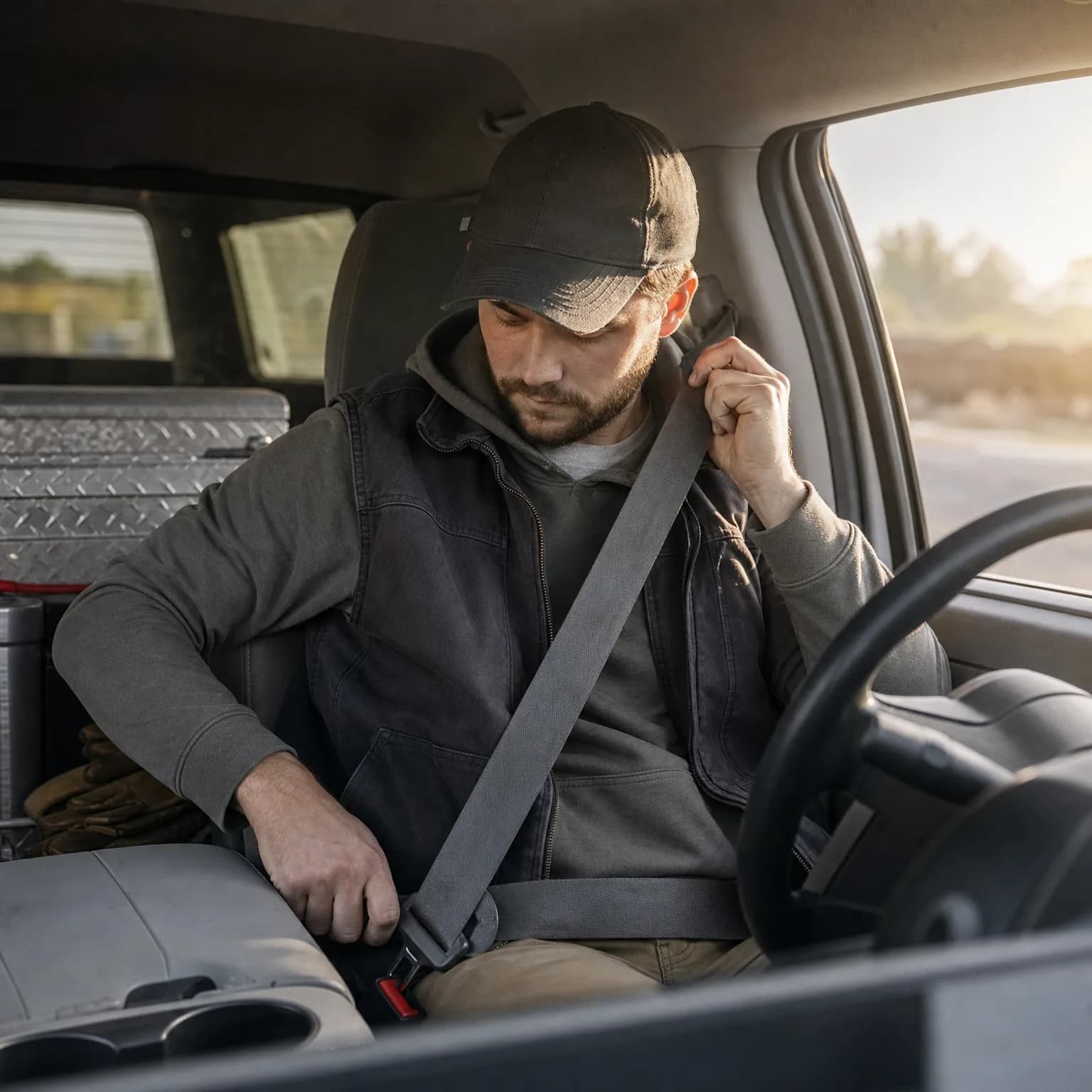
Idaho's observed seat-belt use rate was 87.6% in 2022. Roadside assistance does not replace safe driving habits, but it does provide a safety net when a vehicle breaks down on a rural highway or in winter conditions. The coverage is a contingency plan, not a substitute for vehicle maintenance.
NHTSA, 2022
When to Skip Roadside on Some Vehicles
If your carrier requires you to add roadside to every vehicle or none, and the total cost exceeds what a standalone membership would run, skip the bundled option and buy standalone coverage for the driver who needs it. If your policy allows you to select roadside per vehicle (some carriers permit this, though it is not universal), add it only to the cars that drive regularly or face higher breakdown risk: the daily commuter, the car your teenager drives, the vehicle that travels rural routes in winter.
Rarely-driven cars parked in your driveway most of the year do not justify the per-vehicle fee. A car that only moves twice a month has a low probability of needing a tow. Save the money and apply it to the vehicles that actually need the coverage. If that rarely-driven car does break down, you can pay for a single tow out of pocket for less than a year's worth of unused roadside fees.
Making the Decision for Your Household
Count your vehicles. Count how many actually drive more than once a week. Multiply the per-vehicle roadside fee your carrier quoted by the number of cars on your policy. Compare that total against a standalone membership that covers the driver in any car. If the bundled cost is lower and you want coverage on every vehicle, add it to the policy. If the bundled cost is higher and only one or two cars need coverage, buy standalone for those drivers and skip the per-vehicle add-on.
Ask your carrier whether you can add roadside to individual vehicles rather than all or none. Not every insurer allows this, but some do. If selective coverage is an option, add it only to the cars that drive regularly or face higher risk. If your carrier requires all-or-nothing, the decision simplifies: total bundled cost versus standalone membership cost. Choose whichever covers your household's actual need at the lower price. The right answer depends on how many cars you own, how many actually drive, and what your carrier charges per vehicle.
Comparing Bundled Roadside Against Standalone Membership
Bundled roadside through your auto insurer charges per vehicle. If you own three cars, you pay three times the per-vehicle fee. Standalone memberships like AAA charge per household or per driver, not per car. A single AAA membership covers you in any vehicle you drive: your own cars, a rental, a borrowed car. The membership follows the person, not the vehicle. For a household with multiple cars but only one or two regular drivers, the standalone model often costs less.
Run the numbers for your household. Count how many cars on your policy actually leave the driveway more than once a month. If the answer is one or two, compare the total bundled roadside cost (per-vehicle fee times the number of cars) against a standalone membership that covers those drivers in any car. If three or four cars in your household drive regularly and you want coverage on all of them, the bundled per-vehicle model may close the gap.
Get Your Free Quote
Get My Idaho Car Insurance QuoteFrequently Asked Questions
Does roadside assistance cover all drivers in my household?
Roadside assistance through your auto insurer covers the vehicle, not the driver. Any licensed driver operating a covered vehicle can use the service. If your teenager drives the family car and needs a tow, the policy covers it. If you drive a friend's car and it breaks down, your roadside policy does not apply because the coverage is tied to the vehicle on your policy.
Can I add roadside assistance to only some of my cars?
It depends on your carrier. Some insurers require you to add roadside to every vehicle on the policy or none at all. Others allow you to select coverage per vehicle. Ask your carrier whether selective coverage is an option. If it is, add roadside only to the cars that drive regularly or face higher breakdown risk.
What happens if the tow exceeds my policy's mileage limit?
You pay the difference out of pocket. If your policy caps towing at 15 miles and the nearest repair facility is 40 miles away, you pay for the additional 25 miles. Towing rates vary by provider and location, but rural Idaho tows can run higher due to distance. Check your policy's towing cap before you need it.
Does roadside assistance cover rental cars?
Bundled roadside through your auto insurer covers only the vehicles listed on your policy. If you rent a car, your policy's roadside assistance does not apply. Standalone memberships like AAA cover the member in any vehicle, including rentals. If you rent cars frequently, a standalone membership may offer better coverage than bundled roadside.
Is roadside assistance worth it for a car I rarely drive?
Probably not. A car that sits in the driveway most months has a low probability of needing a tow. The per-vehicle fee for bundled roadside often exceeds the cost of a single out-of-pocket tow if that rarely-driven car does break down. Save the annual fee and pay for the tow only if it happens.
Can I use roadside assistance for a flat tire I can change myself?
Yes, but you do not have to. Roadside assistance covers flat tire changes even if you could do it yourself. If you are on a busy highway, in bad weather, or do not have the tools, calling for service is safer than changing the tire yourself. If you are in a safe location and prefer to handle it, you can skip the service call.