
Cheapest Auto Insurance — Idaho
Free to compare
Why Multi-Vehicle Households Pay Different Rates in Idaho
You own two or more vehicles in Idaho, you need liability coverage that meets the state's $25,000 per person, $50,000 per accident bodily injury, and $15,000 property damage minimums, and you want the lowest combined premium across all your cars. The structural reality: every carrier prices multi-vehicle policies differently, and the household with the cheapest rate for one car rarely keeps that position when you add a second or third vehicle.
Idaho does not regulate how carriers structure multi-car discounts or base rates. Some carriers offer a steep discount but start from a higher base rate. Others price lower from the start but apply a smaller discount. The result is that the cheapest option for your household depends on how many vehicles you insure, where you garage them, and which carrier's pricing model fits your specific vehicle mix.
“A smaller discount on a lower base rate often beats a larger discount on a higher one when insuring multiple vehicles.”

Get More Than the Idaho Minimum for Less
Get My Idaho Car Insurance Quote$888.07
Idaho Average Annual Auto Expenditure Per Vehicle
This figure reflects the average annual auto insurance expenditure per insured vehicle in Idaho as of 2023. Your household's combined premium depends on the number of vehicles, coverage selections, and the carrier's multi-vehicle pricing structure.
NAIC Auto Insurance Database Report 2023
How the Multi-Car Discount Actually Works
The multi-car discount requires every vehicle to sit on the same policy, titled to the same named insured or household members listed on that policy. A vehicle titled to someone outside your household, or a car on a separate policy under a different named insured, does not qualify for the same-policy discount even if both policies are with the same carrier.
Carriers apply the discount to the total premium after calculating each vehicle's individual rate. That means the discount percentage matters less than the combined base rate. A carrier offering a smaller discount on a lower starting rate can produce a lower total premium than a carrier advertising a larger discount on a higher base.
Adding a vehicle mid-term re-rates the entire policy rather than simply adding a flat amount. The carrier recalculates every vehicle's premium based on the new household risk profile, which can shift the combined rate up or down depending on the added vehicle's characteristics.
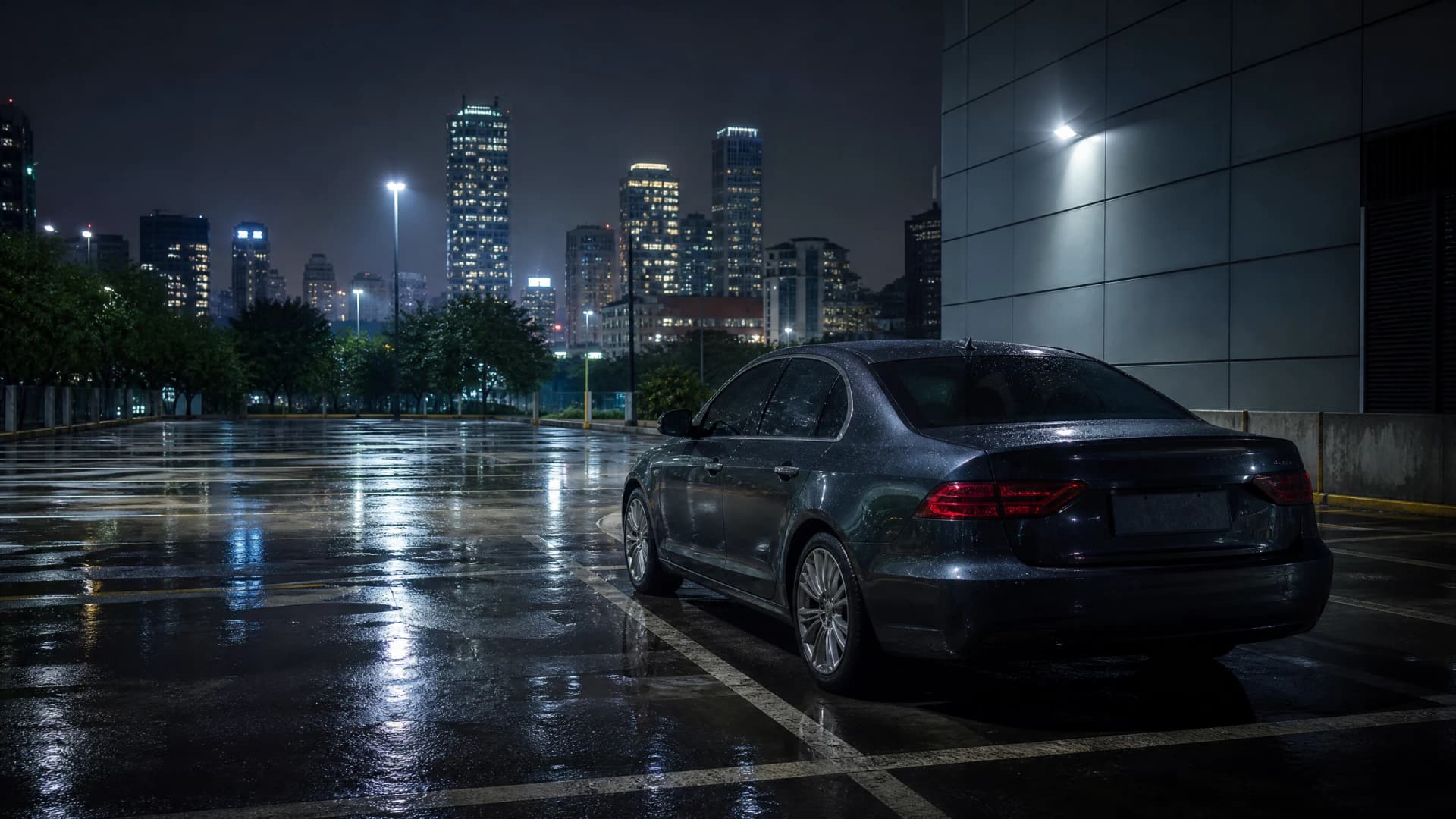
The carrier with the lowest rate for one vehicle rarely stays cheapest when you add a second or third car — multi-vehicle pricing is a different calculation.






What Drives Multi-Vehicle Premium Differences in Idaho
Carriers weight rating factors differently when pricing multi-vehicle policies. The factors that produce the largest premium variance across carriers are the number of vehicles, the garaging ZIP code, each driver's age and violation history, and the year, make, and model of each vehicle.
Idaho allows carriers to use credit-based insurance scores as a rating factor. A household with strong credit may see a larger premium reduction at one carrier than another, even when both carriers use credit scoring. The weight each carrier assigns to credit versus driving history varies by company underwriting guidelines.
Garaging location matters more for multi-vehicle households than single-vehicle households because carriers price theft risk, collision frequency, and uninsured-motorist exposure at the ZIP-code level. A household garaging three vehicles in Boise faces different combined risk than a household garaging the same three vehicles in a rural county, and carriers price that difference inconsistently.
Vehicle age and usage also shift multi-vehicle premiums. A household insuring two newer vehicles with comprehensive and collision coverage pays more than a household insuring two older vehicles with liability-only coverage, but the premium gap between carriers widens as coverage selections increase. Comparing liability-only quotes isolates the carrier's base-rate difference; comparing full-coverage quotes reveals how each carrier prices physical-damage risk across multiple vehicles.
20 carriers
Idaho Auto Insurance Carrier Roster
Idaho's carrier roster includes 20 insurers writing standard, preferred, and non-standard auto policies. Multi-vehicle households benefit from comparing carriers across all three tiers because the lowest combined premium often comes from a carrier outside the household's current tier.
Idaho Department of Insurance carrier licensing records

How to Compare Multi-Vehicle Rates Across Carriers
Request quotes from at least three carriers in different tiers: one standard-tier carrier, one preferred-tier carrier if your household qualifies, and one non-standard carrier if your household includes a high-risk driver or older vehicle. Provide identical coverage limits, deductibles, and vehicle details to every carrier so the quotes reflect pricing differences rather than coverage differences.
When comparing quotes, confirm that every vehicle on the quote sits on the same policy under one named insured. A quote that splits vehicles across two policies or two named insureds does not include the multi-car discount and will price higher than a true multi-vehicle policy. Verify that the quote includes Idaho's required $25,000/$50,000/$15,000 liability minimums at minimum, and add uninsured-motorist coverage if you want protection against Idaho's 6.4% uninsured-motorist rate.
Compare Carriers Writing Your Vehicle Count
The cheapest carrier for your household depends on how many vehicles you insure, where you garage them, and which drivers are listed on the policy. Carriers price multi-vehicle households differently, and the only way to identify the lowest combined premium is to compare quotes across the full Idaho carrier roster. Start with carriers offering online quotes for the fastest comparison, then contact broker-placed carriers if the online quotes do not meet your budget. Verify that every quote includes the same coverage limits and that all vehicles sit on the same policy to ensure you are comparing true multi-vehicle rates.
Which Carriers Write Multi-Vehicle Policies in Idaho
Standard-tier carriers writing multi-vehicle policies in Idaho include State Farm, Geico, Progressive, Allstate, Farmers, Nationwide, Liberty Mutual, Travelers, American Family, and The Hartford. Preferred-tier carriers include USAA (restricted to military-affiliated households), Amica, and Auto-Owners. Non-standard carriers writing multi-vehicle policies include Bristol West, Dairyland, The General, National General, and GAINSCO.
Carriers that require broker placement (Auto-Owners, Bristol West) may offer competitive multi-vehicle rates but do not provide online quotes. Carriers offering online quotes allow you to compare multi-vehicle premiums directly without agent involvement. When comparing carriers, request quotes for the same coverage limits, deductibles, and vehicle lineup to isolate the pricing difference rather than the coverage difference.
Get Your Free Quote
Get My Idaho Car Insurance QuoteFrequently Asked Questions
Does Idaho require the same liability limits for every vehicle on a multi-car policy?
Yes. Idaho requires every vehicle on the policy to carry at least $25,000 per person, $50,000 per accident bodily injury liability, and $15,000 property damage liability. You cannot insure one vehicle at the state minimum and another at a higher limit on the same policy without meeting the minimum on both.
Can I get a multi-car discount if my vehicles are titled to different household members?
Yes, as long as every vehicle sits on the same policy under one named insured and all titled owners are listed on that policy. A vehicle titled to someone outside your household or on a separate policy does not qualify for the same-policy discount.
Do all Idaho carriers offer multi-car discounts?
Most carriers writing in Idaho offer multi-car discounts, but the discount percentage and the base rate vary by carrier. Some carriers price lower from the start and apply a smaller discount; others start higher and apply a steeper discount. The combined premium matters more than the discount percentage.
How many vehicles can I insure on one Idaho auto policy?
Most carriers allow up to four or five vehicles on one policy. Households with more than five vehicles may need to split coverage across two policies or work with a carrier specializing in large-fleet household policies.
Does adding a third vehicle to my Idaho policy always raise my premium?
Adding a vehicle re-rates the entire policy, so the combined premium usually increases. However, the increase depends on the added vehicle's year, make, model, and how the carrier prices the new household risk profile. In some cases, adding an older vehicle with liability-only coverage produces a smaller increase than expected.