
Multi-Car Insurance Coverage — Idaho
Free to compare
When Every Vehicle Needs Idaho Minimums
You own two or more vehicles and need to structure coverage that meets Idaho's liability requirements for every car while keeping the household premium manageable. The decision is not whether to insure each vehicle — Idaho Code Title 49 chapter 12 requires proof of insurance for every registered car — but whether to place them all on one policy or split them across separate policies.
Idaho requires $25,000 bodily injury per person, $50,000 bodily injury per accident, and $15,000 property damage per vehicle. Those minimums apply to every car you register, regardless of how many vehicles sit on the policy. The multi-car discount most carriers offer requires every vehicle to sit on the same policy, often garaged at the same address. That structural requirement is what creates the coverage decision.
“The multi-car discount applies to the policy structure, not the household — vehicles on separate policies do not qualify.”

Get More Than the Idaho Minimum for Less
Get My Idaho Car Insurance Quote$25,000/$50,000/$15,000
Idaho Liability Minimums
Every registered vehicle in Idaho must carry at least $25,000 bodily injury per person, $50,000 bodily injury per accident, and $15,000 property damage. These are per-vehicle requirements, not household totals.
Idaho Code Title 49 chapter 12
One Policy or Separate Policies
The multi-car discount requires every vehicle to sit on the same policy. If you split vehicles across two policies — one for your daily driver, one for your spouse's car — neither policy qualifies for the multi-vehicle discount, even if both policies are with the same carrier. The discount applies to the policy structure, not the household.
A vehicle titled to someone outside your household typically does not qualify for your policy's multi-car discount. If an adult child owns a car titled in their name and garaged at a different address, that vehicle usually requires its own policy. The same-policy requirement is structural: the discount applies when multiple vehicles share one policy number, one renewal date, and one premium calculation.
Combining two existing policies after marriage or a household move usually lowers the combined premium, but not always. When one spouse carries a violation history or drives a high-value vehicle, combining policies can raise the total premium compared to keeping them separate. The only way to know is to compare the combined-policy quote against the sum of the two separate premiums.
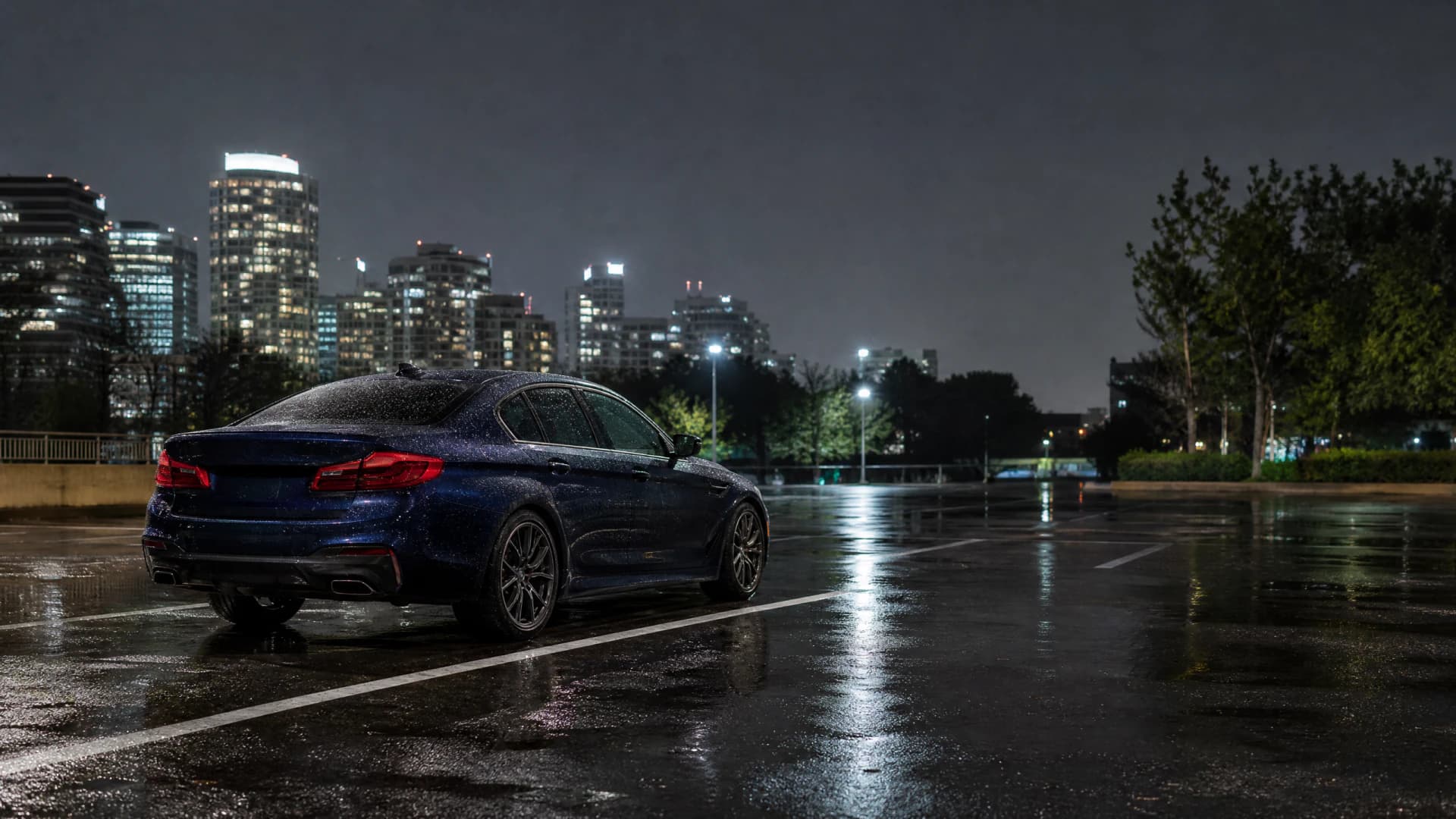
The multi-car discount applies only when every vehicle sits on the same policy, typically garaged at the same address. A vehicle on a separate policy does not count.







Coverage Decisions Across Multiple Vehicles
Idaho does not require uninsured motorist coverage or personal injury protection, but both are available as optional coverages. When you insure multiple vehicles on one policy, the uninsured motorist coverage you select applies to every car on the policy. You cannot carry uninsured motorist on one vehicle and decline it on another within the same policy.
Full coverage — liability plus collision and comprehensive — is a decision you make per vehicle, not per policy. You can carry full coverage on your daily driver and liability-only on an older second car that you drive infrequently. The multi-car discount applies to the policy regardless of which vehicles carry full coverage and which carry liability-only.
A vehicle you drive rarely — a classic car, a seasonal vehicle, or a third car used only for errands — can sit on the same policy as your daily drivers. Some carriers offer usage-based or low-mileage discounts that reduce the premium for vehicles driven fewer than a set number of miles per year. That discount stacks with the multi-car discount when the rarely-driven vehicle remains on the same policy.
6.4%
Idaho Uninsured Motorist Rate
6.4% of Idaho motorists drive without insurance. Uninsured motorist coverage is optional in Idaho but protects you when an at-fault driver cannot pay for damages they cause.
Insurance Information Institute, 2023

Which Carriers Write Multi-Car Policies in Idaho
State Farm, Geico, Progressive, Allstate, Farmers, American Family, Liberty Mutual, Nationwide, and USAA all write multi-vehicle policies in Idaho. The multi-car discount structure varies by carrier — some apply a percentage discount per vehicle, others reduce the base rate when the policy includes multiple cars. The only way to compare is to request quotes that include every vehicle you plan to insure on the policy.
Carriers that specialize in non-standard or high-risk auto insurance — Bristol West, Dairyland, The General, GAINSCO, National General — also write multi-car policies in Idaho. If one driver on the policy carries a violation history or a suspended license, a non-standard carrier may offer a lower combined premium than a standard carrier would quote for the same household.
Compare Carriers for Your Vehicle Count
The multi-car discount is not uniform across carriers. A smaller discount on a lower base rate can produce a lower total premium than a larger discount on a higher base rate. The only way to know which carrier offers the lowest combined premium for your household is to compare quotes that include every vehicle, every driver, and the coverage levels you plan to carry.
Request quotes from at least three carriers. Provide the same vehicle information, driver information, and coverage selections to each carrier so the quotes are comparable. The quote should reflect the multi-car discount automatically when you list multiple vehicles on the same policy. If the quote does not show a multi-vehicle discount, ask the carrier whether the discount applies and how it is calculated.
How Adding a Vehicle Re-Rates the Policy
When you add a second or third vehicle, the carrier recalculates the premium for every car on the policy. The multi-car discount typically increases with each additional vehicle — the discount on three cars is larger than the discount on two — but the base premium also rises because the household now presents more exposure. The net effect depends on the added vehicle's value, the primary driver's record, and how the carrier weights multi-vehicle risk.
A newly purchased vehicle is covered under your existing policy for a limited grace period, typically 14 to 30 days depending on the carrier. After that window, an unreported car can be denied at claim time. Most carriers require you to report the new vehicle within the grace period to maintain continuous coverage. Missing that window does not cancel the policy, but it can void coverage for the unreported vehicle retroactively.
Get Your Free Quote
Get My Idaho Car Insurance QuoteFrequently Asked Questions
Does Idaho require the same coverage on every vehicle on a multi-car policy?
Idaho requires $25,000/$50,000/$15,000 liability on every registered vehicle, but you can carry full coverage on some cars and liability-only on others within the same policy. The multi-car discount applies regardless of which vehicles carry collision and comprehensive.
Can I add a vehicle to my Idaho policy mid-term?
Yes. Most carriers provide a grace period of 14 to 30 days to report a newly purchased vehicle. Adding the vehicle re-rates the entire policy based on the new vehicle count and attributes. Missing the grace period can void coverage for the unreported vehicle retroactively.
Does a vehicle titled to my adult child qualify for my multi-car discount in Idaho?
Typically no. The multi-car discount requires every vehicle to sit on the same policy, and a vehicle titled to someone outside your household usually requires its own policy. If the adult child lives at a different address, the vehicle does not qualify for your policy's discount.
How does the multi-car discount work when I combine policies after marriage?
Combining two policies into one typically qualifies for the multi-car discount, but the combined premium is not always lower than the sum of the two separate premiums. If one spouse carries a violation history or drives a high-value vehicle, combining policies can raise the total. Compare the combined quote against the separate premiums.
Can I insure a rarely-driven vehicle on the same Idaho policy as my daily driver?
Yes. You can carry a rarely-driven vehicle on the same policy and structure coverage differently — liability-only on the rarely-driven car, full coverage on the daily driver. Some carriers offer low-mileage discounts that stack with the multi-car discount when the vehicle remains on the same policy.